Year:
2025
Focus:
Product Design
For:
Personal Project
PROBLEM
AI is no longer just a tool for convenience, but a confidant, a first stop for mental health support, especially for younger generations
From 2024 to 2025, Harvard Business Review reported that “therapy/companionship” rose from the #2 to the #1 most common use case for AI. The Wall Street Journal highlighted “Sonny,” an AI chatbot being adopted by school districts to meet rising demand for student mental health support. On social media and Reddit threads, Gen Z openly discusses turning to ChatGPT for therapeutic conversations.
This trend reflects both opportunity and risk. On one hand, AI can help address the shortage of mental health providers and offer immediate, accessible support. On the other, over-reliance on unregulated chatbots risks harmful outcomes and undermines the nuanced care only human therapists can provide.

USER INTERVIEWS
Turning to my own community to understand how people are really interacting with AI in the context of mental health
I surveyed 15 people about their experiences with AI for mental health. Only 5 participants reported feeling comfortable sharing personal thoughts with AI, while 67% expressed distrust, especially regarding sensitive topics. Yet all acknowledged that AI is here to stay and emphasized the need for full transparency when interacting with these tools. Among the 5 who do use platforms like ChatGPT to process emotions, none considered it a replacement for human therapy, citing convenience, fear of judgment, and affordability as their main reasons.

COMPETITIVE ANALYSIS
Uncovering market gaps
Competitors like ChatGPT, Abby, TherapyAI, and Myentries often encourage ongoing AI reliance instead of connecting users with real therapists. Lack of clinical oversight and design for safety, combined with engagement-driven incentives, can create inconsistent experiences and even promote misuse.

TARGET USER
Imagining the Gen Z user
"I wish I could just hit pause on my brain sometimes and figure out what I actually want to say."

LOW-PROTOTYPING
Understanding how users engage with AI support

THE VISION
Placing the support-seeking persona in a context scenario helps identify the required actions the platform needs to support
The user will be able to access session summaries of key highlights and important topics to discuss after each conversation with the support model, which they then will have the option to share and discuss notes prior to the session with their chosen therapist/counselor.

KEY ITERATIONS
AYA evolved into an AI companion designed with empathy, boundaries, and purpose, creating a bridge between digital comfort and human connection


Mindful Onboarding
A simple and engaging start that only asks the most essential questions, ensuring the process feels easy and intentional.
Journaling & Chat
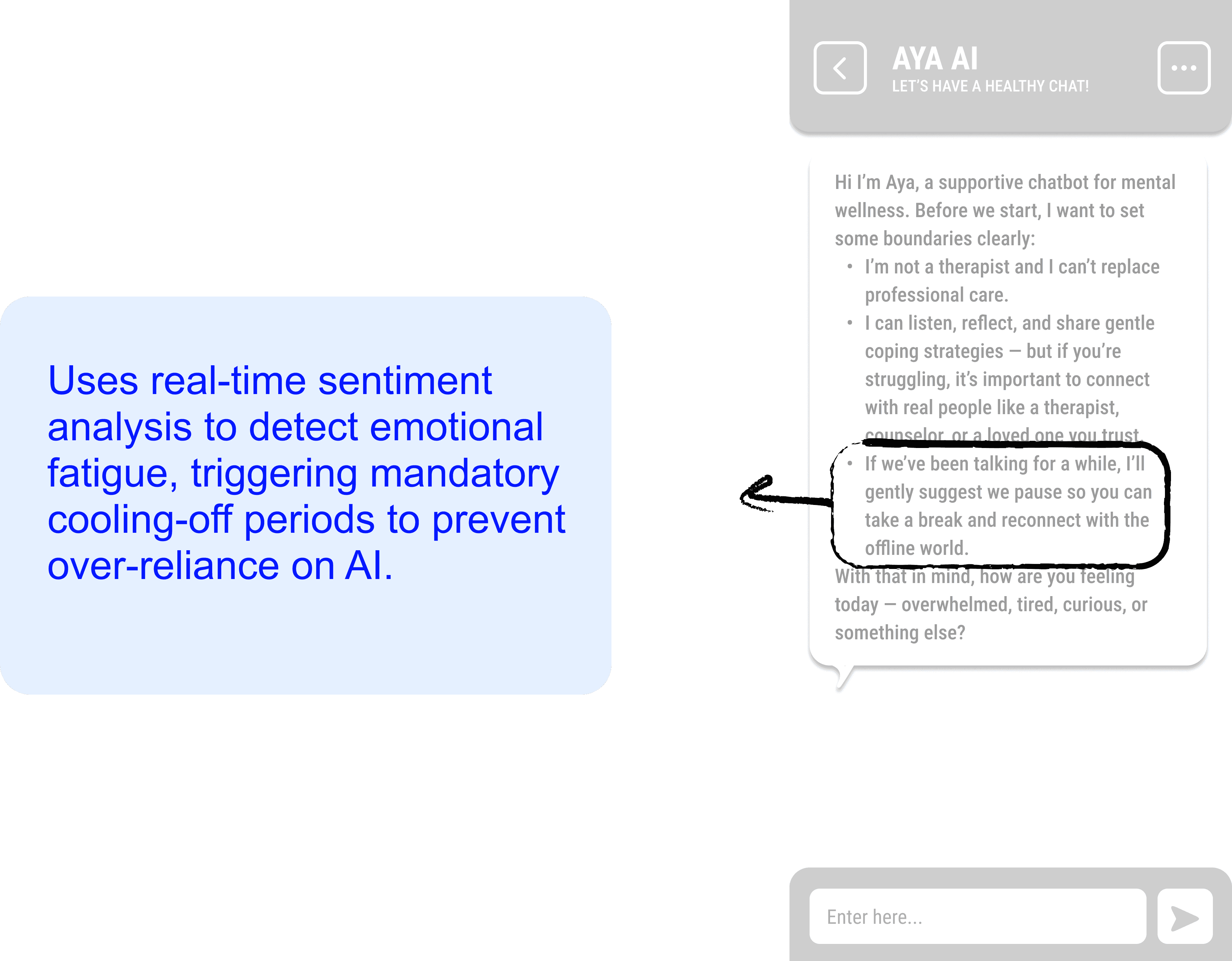
A space to log thoughts and feelings that carry into future sessions, helping users feel prepared and capturing the emotions they want to remember for their therapist. To prevent overreliance, gentle blockers are built in to discourage excessive use, and all advice emphasizes the importance of seeking real-life support.
Smart Matching & Resources
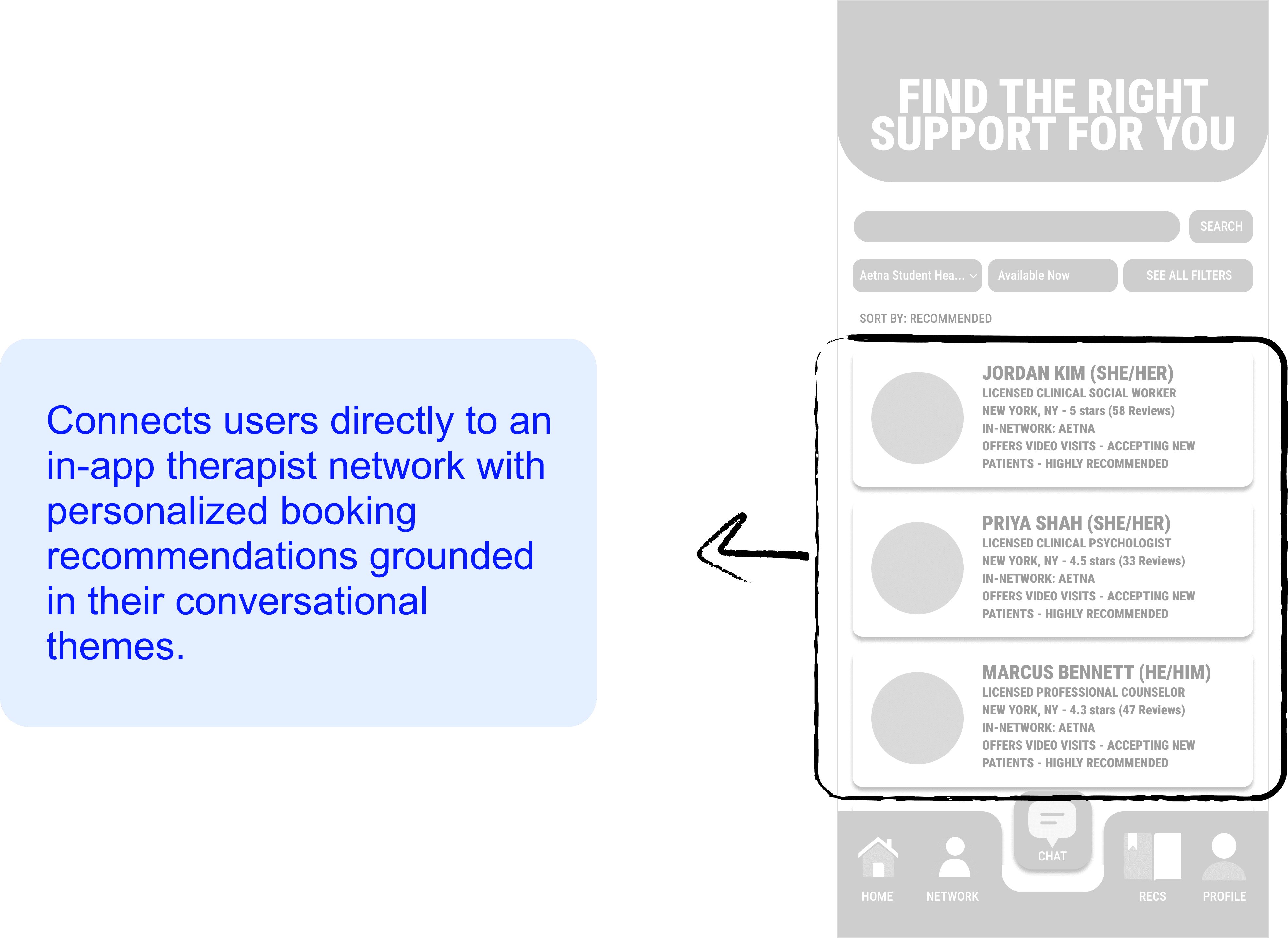
Matches users with therapists based on their concerns and personal profile, while also offering personalized resources drawn from journal entries and user data.
USER TESTING
AYA highlights the importance of a healthier relationship with the use of AI tools and emphasizes the need to seek real-life care for well-being
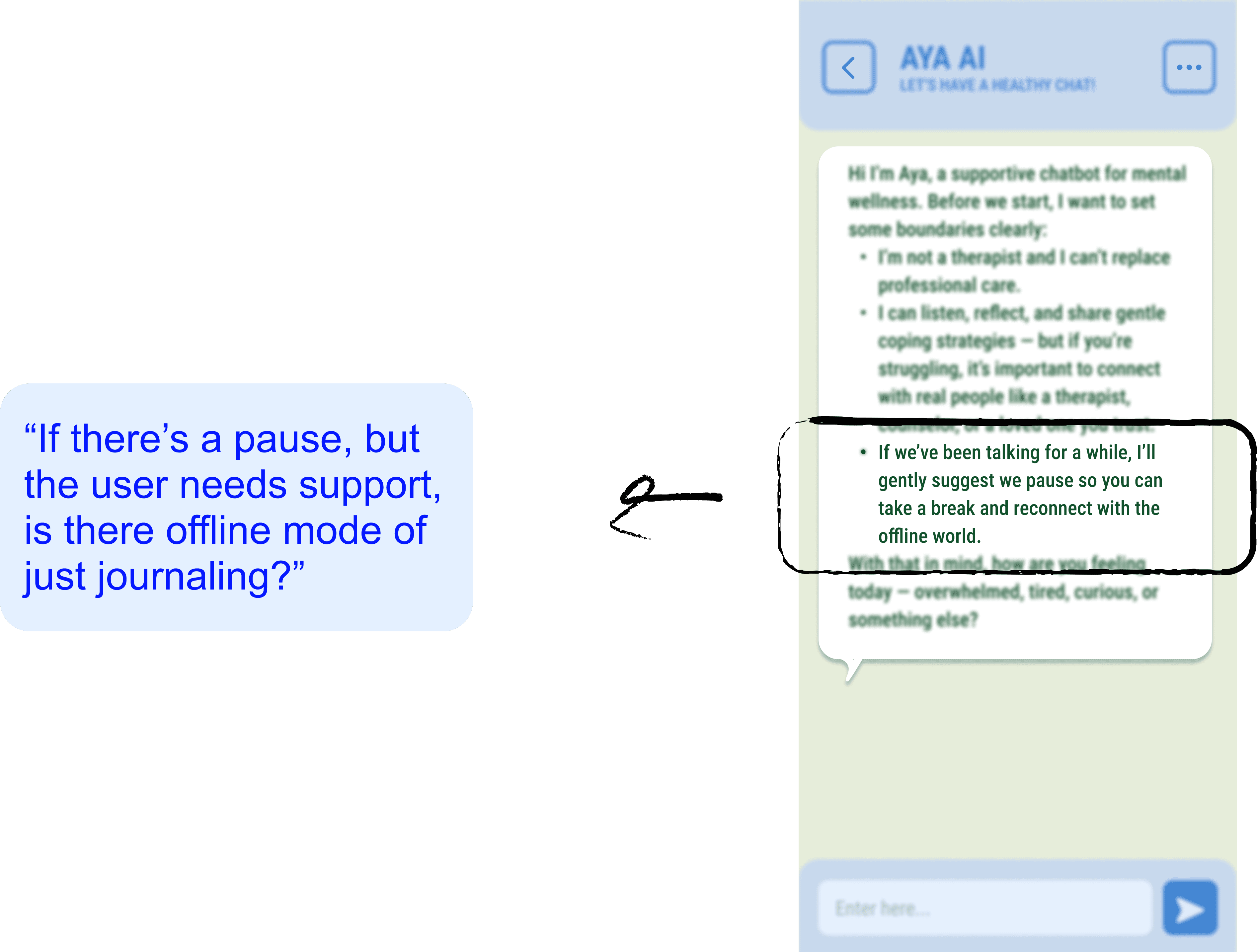
80% of 10 participants felt that AYA’s limited chat sessions encouraged reflection and prevented over-reliance on AI and 70% of 10 participants found the prompts to connect with friends or therapists supportive and helpful.


OUTCOME
Looking Ahead
Working on AYA revealed the tension between perceived empathy and performative support, highlighting the societal and ethical limits of AI-mediated care. These insights inspire my Major Studio 1 thesis, which explores authenticity, trust, and boundaries in human-AI relationships through interactive design. Future iterations could integrate biofeedback from mobile devices or smartwatches to detect stress and offer personalized support, extending human-centered AI care responsibly.
